How Jersey Moving Pro Deals with Historic District Transfers
Historic neighborhoods ask for a different kind of shift. The streets are tighter, the rules run deeper, and the homes themselves behave like elders using idiosyncrasies you only learn by listening closely. Trim is delicate. Plaster tends to crack if you rush. Original banisters resist standard padding. You cannot just send a big truck and muscle through it. You prepare, then you plan again, and you move with a steady hand.
I have handled relocations into and out of row houses that predate indoor plumbing, colonials where the staircase pitches like a ship ladder, and brick townhomes with curbs so high you measure them before choosing your ramp. The process works when you respect the building and the block. That is the guiding idea behind historic district relocations, and it is the approach Jersey Moving Pro brings to these jobs.
Why historic districts demand a different playbook
Zoning overlays and preservation rules add layers most modern neighborhoods never see. A move that could be wrapped in half a day elsewhere might expand to a full day because you cannot block the lane during school drop-off or you must load from the alley to avoid a landmarked façade. Local boards sometimes require protective materials at all exterior doors. Some districts restrict truck size or weight. It is not unusual to get a permit that spells out the exact location of a staging zone down to the nearest tree pit.
There is also the character of the buildings. Many homes use hand-troweled plaster, old-growth hardwood, leaded glass, or stone thresholds that suffer when you drag or bounce even a few inches. Heavier furniture challenges staircases whose treads were built for foot traffic, not armoires. The risk profile shifts. You plan for physics as much as logistics.
Pre-transfer reconnaissance, not guesswork
The single biggest mistake in a historic district is assuming the house fits the furniture because it did once. Maybe the last movers removed a door that now sticks from humidity, or they took a window sash out for a couch that you organize to turn sideways. The only way to know is to measure and test paths in person.
A proper reconnaissance starts at the curb. You check tree clearances for box trucks. You note hydrants and school zones. You measure the distance from the curb to the stoop for ramp angle. You track where scaffolding or construction dumpsters might create pinch points. Inside, you check each turn, stair rise and run, and headroom under low beams. If a landing gives you 35 inches with the banister, but the buffet is 36 inches through its crown molding, you do not leave that to chance. You either remove the crown or reroute the piece to a window hoist.
This kind of survey takes 45 to 90 minutes for most homes. On larger properties or multi-family conversions, foresee longer. It is time well spent. Every minute scouted saves five throughout the move.
Jersey Moving Pro’s route planning for narrow streets and tight schedules
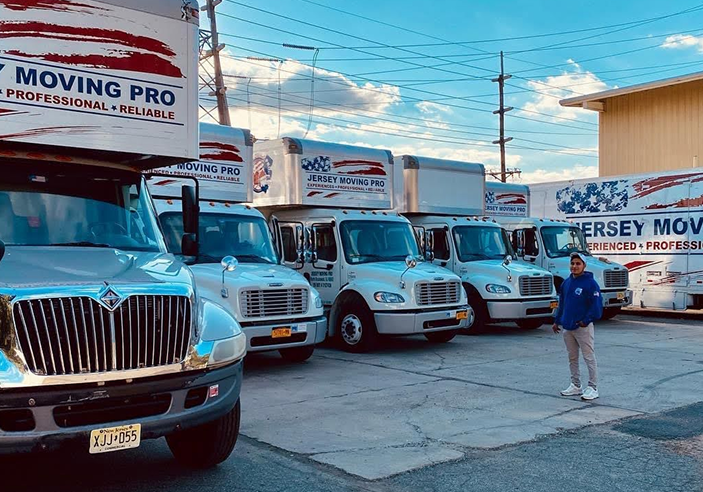
Historic neighborhoods often share one constraint: roads built for horses and handcarts. Thru-streets narrow without warning. Parking turns over slowly. A full-size tractor-trailer does not belong on many of these blocks. Jersey Moving Pro uses medium box trucks via short wheelbases for most historic district relocations, often two trucks leapfrogging loads instead of one oversized vehicle. That keeps the footprint small and maneuverable, which means fewer penalties and faster adjustments when a street is unexpectedly coned for utility work.
Planning the route matters as much as picking the truck. The staff checks local calendars for farmer’s markets, marathon days, and street fairs that close arteries or flood the area with foot traffic. In New Jersey, school start and release windows can gridlock you for half an hour. Factor in waste collection schedules, since parked sanitation trucks can pin you in place on a one-lane block. When a house sits near a commuter corridor, the crew targets arrival just after the rush tapers to avoid turning a 10-minute strategy into 50 minutes of idling.
Permits, boards, and neighbors: the early communications
Historic districts tend to carry more oversight. You might be required to protect a stoop with plywood sheets under a moving blanket, or to post temporary signage for a reserved curb space during specified hours. Boards vary, but the pattern is predictable. Call early, get the checklist in writing, then over-prepare. Even if a permit is not strictly required, some neighborhoods appreciate a heads-up note in the lobby or a flier on the block. That may sound soft, but it is deeply practical. A neighbor who knows the plan is more likely to free a parking space or keep a pet inside while doors are propped.
I keep a folder for each shift through printed permits, insurance certificates, and a block map via staging marked in highlighter. Tape the day-of permit near the entrance so a building superintendent or moving company new brunswick nj patrol officer sees it immediately. The few minutes you invest there can keep a move from stalling over a misunderstanding.
Protecting old bones: doorways, floors, plaster, and glass
The biggest damage risks in older homes are thresholds, delicate wall surfaces, and long, narrow stair runs. Every protection you use should reflect age and fragility.
Doorways and thresholds need coverage that spreads weight. A simple rubber mat could emboss into soft stone or trap grit. A layered approach works better: relocating blanket to catch debris, then foam board, then a rigid hardboard sheet to distribute load. On the hinge and latch sides, extra padding prevents door swing from scuffing the jamb when teams carry wide pieces.
Hardwood floors vary by species and finish. Old oil-based finishes scratch easily. Lay Ram Board or a similar rigid floor protection, then tape seams to themselves, not the floor, to avoid pulling finish. In tight hallways, add felt runners under ramps or utility dollies so pivots do not bite. If the home uses original square nails near thresholds, be ready with hand tools to countersink any proud nail heads before a piano wheel finds them the hard way.
Plaster behaves differently than drywall. Vibration travels farther, and fast pressure spikes cause cracks at corners and around doorways. The fix is slower, gentler motion and tighter communication. One mover calls steps and angles, the other responds without jerks. For very fragile rooms, set two crew members as spotters with wide pads held against corners so a sideboard leg cannot tap the wall.
Leaded or wavy glass needs air and foam, not plastic wrap pressed directly to the panes. Wrap frames first, float the glass behind soft material, and keep face-down pressure off. A wrapped sash in a lined mirror carton, stored upright, survives much more reliably than glass wrapped to the wood frame.
When the stairs say no: window and balcony hoists
Historic layouts sometimes refuse a 90-degree turn at the top of a staircase. If the landing and ceiling leave no clearance, the answer is a controlled exterior lift through a large window or balcony door. You do not improvise a hoist because the truck box has rope. You plan it.
A safe hoist starts with assessing anchor points. Old cornices are ornamental, not structural. Use window openings or modern anchors rated for the load, or bring a portable material lift rated above any heaviest piece. Remove sash and stop molding carefully, label hardware, and protect the sill using layered pads and rigid sheets. Two or three movers control the piece through tag lines, one guides from inside, and one watches street-side clearance to keep pedestrians safe. When you reseat a window or door, one's finish carpenter’s touch pays off: the hardware goes back the way you found it.
Packing antiques and fragile items that have a story
Heirlooms carry more value than a price tag. You treat them like relatives you promised to watch. Proper technique makes the difference between a smooth arrival and a regret.
Use double-walled cartons for crystal, china, and fragile collections. Wrap each piece individually in paper or foam, then nest smaller items within larger bowls only with padding between, never glass on glass. For large framed art, avoid tape that could touch varnish or gilding. Build custom corrugate corners, then wrap the whole piece in a soft blanket before sliding it into a mirror carton with foam rails. For tall case clocks, secure the pendulum and weights separately, immobilize the movement with correct pads, and carry upright with two handlers on stairs, not laid flat in a truck where vibration can do work you do not see.
Some homeowners prefer to pack themselves. Offer guidance, and check a few boxes together. If you feel movement inside a box when you tilt it an inch, the item will move five inches on a highway curve. That is where chips come from.
Jersey Moving Pro’s specialized handling in historic homes
Jersey Moving Pro approaches these projects with a cautious tempo that still respects the schedule. The crew leads a brief walk-through on arrival, pointing out protection already installed and any new risks discovered since the initial visit. Staging zones are established for outgoing and incoming items so doorways do not become choke points. Tools for disassembly, from furniture keys to square-drive bits for older fasteners, stay within arm’s reach.
In one Morris County colonial, a client’s Welsh dresser measured a thumb too wide for the second-floor turn. Jersey Moving Pro removed the top rack and gently detached its crown molding to relieve a half inch on each side, labeling the hardware in a zip bag taped to the interior. The dresser moved upstairs without incident, and the crown went back with a snug seam. You rarely need heroics if you prepare to finesse instead of force.
The two-part timing: building rules and local rhythms
Historic district buildings often layer their own rules over municipal ones. Some co-ops bar moves before 9 a.m., or after 4 p.m., or throughout certain holidays tied to parades. Freight elevators need reservations. Flower demonstrates, church options, and farmer’s markets can choke nearby streets. The only way to win this game is to stack constraints early, then choose a window where most align to your favor.
When rules constrict, the crew splits loads. One truck runs smaller shuttle trips to a nearby legal staging area or storage while the primary crew completes the in-house work. This reduces time via doors propped and keeps noise levels lower, which matters in older buildings where sound carries.
Climate and season: humidity, snow, and heat on old materials
Moisture changes wood. On July days where humidity hovers above 70 percent, softwood doors swell and tight corners get tighter. A credenza that moved through a doorway in January may resist in August. If you feel binding, you stop. A micro-planing pass on a sacrificial moving board is better than forcing a valuable edge. In winter, brittle finishes and micro-cracked varnish chip with a sudden knock. Wraps should be snug but breathable, and you avoid leaving antiques in the cold truck for more than you must.
Snow and ice add traction problems. Jersey Moving Pro keeps calcium chloride and granular traction mats on trucks while winter. Before the first item moves, the path is treated, shoveled to bare surface, then covered with protection that has grip, not just a seamless runner. A crew member stays outside as a safety spotter. The added minutes lessen falls and keep water off old floors, which do not love melt puddles.
The human element: communication and pace
A slower, steadier move might feel indulgent until you look at the drywall dust from a rushed bump, or the hairline crack that appears the next day. Professional crews talk constantly on stairs and in tight corners. They confirm the weight, the turn angle, and the number of steps before each move. That cadence lowers heart rates and lowers risk. The homeowner should feel invited, not sidelined. When a sentimental piece asks for extra padding or a different route, you discuss it in the moment. Surprises breed mistakes.
Good communication extends to the street. Neighbors often help if you treat the block with respect. A friendly knock to the café next door can make a barista the day’s hero by guiding a delivery van around your staging zone at the critical moment.
Insurance and documentation suited to historic value
No one wants to talk about coverage on a day full of memories. You still need to. Older homes and antiques require documentation because the standard replacement clauses do not address irreplaceable trim or custom glass. Walk the property with a camera before the relocation. Photograph doorways, staircases, and any pre-existing dings on furniture and surfaces. Inventory high-value items by name and description, not just count, and note their condition. Understanding coverage options matters, and it is worth asking direct questions until you are satisfied that the protection matches the risk.
Jersey Moving Pro keeps detailed inventory sheets and uses labeling that ties every piece to its room destination. When the destination is another historic property, that labeling smooths placement and prevents “temporary” stacking in unsafe corners while teams figure things out. The more precise the labels, the less time items spend in motion.
Jersey Moving Pro’s methods for protecting hardwood floors and millwork
Historic floors can carry cupping, brittle finish, or shallow nail heads. Jersey Moving Pro lays layered protection on main paths: first, a dust-catching blanket; second, a rigid board that spreads pressure; third, tape-to-tape seams that avoid adhesives on the floor. Furniture sliders used under weight-bearing points minimize grinding when a pivot is unavoidable. Baseboards and wainscoting get column pads at turning points to catch any swing. On stairways, the crew wraps newel posts fully and secures pads with soft ties that do not leave adhesive residue on aged finish. This level of detail sounds fussy until you tally how many small grazes happen at shin height during an average move.
Case vignette: shifting a piano into a split-level through a museum staircase
A split-level home in a designated district presented a classic problem. The client owned a baby grand that had to reach a mezzanine overlooking the living room. The stairs, a visual centerpiece, featured open risers and a sculptural wood handrail from the 1960s. The structure would not accept a conventional skid path, and the rail could not handle clamp pressure without risking denting.
The plan combined a portable material lift with a padded platform built to bridge the open risers without touching the handrail. The piano was partially disassembled, lyre and lid removed, harp secured, and the body wrapped in a custom quilt with rigid edge guards. Four handlers controlled the ascent, two at the base and two guiding from above, while a spotter monitored clearance. The lift carried the majority of the weight, allowing precise inches-at-a-time motion. The piano reached the mezzanine without a mark. The staircase remained pristine. That job reinforced a simple lesson: engineering decisions belong in historic moves just as much as muscle.
Staging, not stacking, at the destination
Old houses rarely offer expansive mudrooms where you can set everything down to think. You need a placement plan before the first item crosses the threshold. Staging moves in waves: empty rooms receive large, stable items first, then mid-sized case goods, then smalls and boxes. Anything wobbly or top-heavy should not sit on old floors without leveling feet or felt pads in place. If the homeowner plans to refinish floors shortly after the move, ask to keep heavy pieces on sliders until the finish date to avoid another heavy-lift cycle.
The small tools that make the biggest distinction
For historic homes, certain tools earn permanent spots in the kit. Low-profile piano dollies, shoulder harness systems that keep weight centered, rubber-tired hand trucks that roll quietly on old boards, and trim-secure pry tools for removing window stops. Spare felt pads, self-leveling laser for checking tilt on old floors, and a set of furniture blankets that are soft enough for French polish. Nothing fancy on paper, yet each prevents a type of damage you cannot afford.
Here is a short, practical checklist that helps owners prepare without overwhelming them:
- Confirm permits and building rules one week ahead, and post any required notices. Photograph key surfaces and high-value items for condition records. Clear 36-inch paths from door to destination rooms, including stair turns. Set aside delicate or sentimental items you prefer to hand-carry. Identify any windows or doors previously used for large furniture, and locate the hardware.
When the street will not cooperate: shuttle transitions and micro-staging
Sometimes the block defeats a direct approach. In older parts of towns like Morristown or Montclair, a street festival or emergency utility work can shrink access to a sliver. Shuttle relocations fill the gap. The crew stages items in a nearby legal zone, then runs smaller loads into the district using a compact van or a single short truck. It takes more trips, but the house and neighborhood stay calm, and the job stays within the rules.
Micro-staging inside the home helps too. In a narrow foyer, set a landing zone that handles only the next three pieces. The rest wait outside under weather protection, not piled in a hall that risks bumps.
Jersey Moving Pro’s cadence for multi-family historic buildings
Many historic districts include walk-ups and pre-war elevator buildings. Freight elevators, if present, might be small and heavily scheduled. Jersey Moving Pro coordinates elevator reservations, then structures the crew to mirror that schedule. One team stages on the sidewalk, one feeds the elevator, and one distributes inside. Communication runs like a relay. When elevator windows are tight, the elevator team sets the pace, not the sidewalk personnel. You avoid pileups that crowd lobbies and frustrate neighbors.
In walk-ups, weight management saves knees and banisters. Heavier items go earlier while energy is high, then smaller items fill gaps. Frequent micro-breaks prevent the shake that leads to mistakes on the fourth-floor landing.
The last 5 percent: the walkthrough that catches what matters
At the end of a historic move, fatigue invites shortcuts. Resist them. Walk the home with the owner, room by room. Open and close doors you removed. Check stair pads came off without residue. Confirm hardware bags sit using their furniture pieces, not on a random shelf. Test lamps and electronics if they were moved assembled. Make a note of any tiny paint smudges or dings the team caused and set the plan to make them right. These homes have long memories. Leaving them tidy and intact honors that.

Lessons learned from decades of old-house transfers
Historic district relocations reward patience, planning, and steady technique. Treat every doorway like a valuable frame, each stair like a bridge, and each neighbor like a partner. When a piece will not fit, assume the house is telling you to change your method, not your force. The more you prepare, the less you improvise. Improvisation has its place, but it should be the backup plan, not the default.
Jersey Moving Pro’s perspective on risk, reliability, and respect
What separates a routine move from a historic district success is judgment. Jersey Moving Pro trains crews to decide when to pause a carry, to ask before removing a piece of molding, and to swap a route rather than squeeze a turn. The company’s trucks use air ride suspension, which helps fragile contents through bumpy streets and stone pavers. Crews carry climate-sensitive wraps for artwork and instruments, and they keep Certificates of Insurance ready for buildings that require them. That is not marketing fluff. It is the everyday toolkit you need when relocating among structures built in 1905 and neighborhoods that guard their character closely.
A final word on pace and pride
If you feel the move is unhurried compared to others you have experienced, that is by design. Historic homes reward a calm pace and careful steps. The day ends through furniture where it belongs, floors unscathed, neighbors still friendly, and a building that looks exactly as it did when you arrived. That is the standard worth meeting.
And that is how Jersey Moving Pro handles historic district transitions: with a plan that respects the block, the building, and the stories that came with it.